
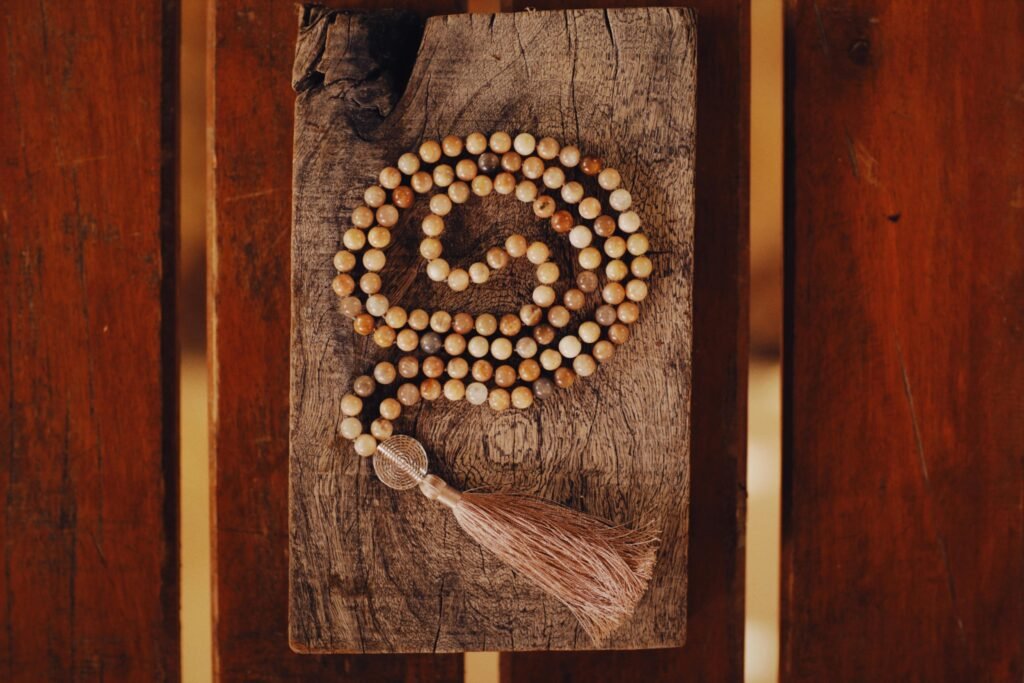
The Ancient Thread Between Mind, Body, and Spirit
Long before yoga studios dotted city streets and meditation apps buzzed in our pockets, mala beads were quietly being passed down through generations as sacred tools for focus, devotion, and mindfulness.
Mala beads aren’t just jewelry. They’re a physical reminder to slow down, breathe, and connect with what matters most.
“The beads don’t change you. They remind you of the change you’re working towards.”
A Brief History of Mala Beads
The word “mala” comes from Sanskrit, meaning “garland.” Traditionally, they are strings of beads — most often 108 beads — used in meditation to count mantras or breaths.
- In Hinduism, Mala beads are often used for repeating sacred mantras dedicated to a particular deity.
- In Buddhism, Monks and practitioners use them to maintain focus during recitations, sometimes pausing to turn the beads in their hands with each repetition.
- Across cultures: Variations of prayer beads exist everywhere — from Catholic rosaries to Islamic misbahas.
Anatomy of a Mala
If you’ve ever seen a mala necklace, you might notice it’s not just beads strung together — there’s intention in every part:
- 108 beads: Sacred in many traditions.
- The guru bead: Marks the start/end of a cycle, symbolizing the teacher or divine.
- Tassel or charm: Represents enlightenment, unity, and connection.
Some malas are made from rudraksha seeds for protection, or gemstones like rose quartz for compassion, amethyst for clarity, or black onyx for strength.
How to Use Mala Beads in Meditation
- Find a quiet place — Sit comfortably, close your eyes, and breathe deeply.
- Hold the mala in your right hand — Let it drape over your middle finger, using your thumb to move each bead.
- Choose a mantra or intention — It could be “Om Mani Padme Hum” or “I am calm.”
- Begin at the guru bead — Move to the next bead, repeat your mantra.
- Continue around the circle — Pause in gratitude when you return to the guru bead.
“Mala beads are like a thread running through your day, holding your focus together when the world pulls it apart.”
In Daily Life
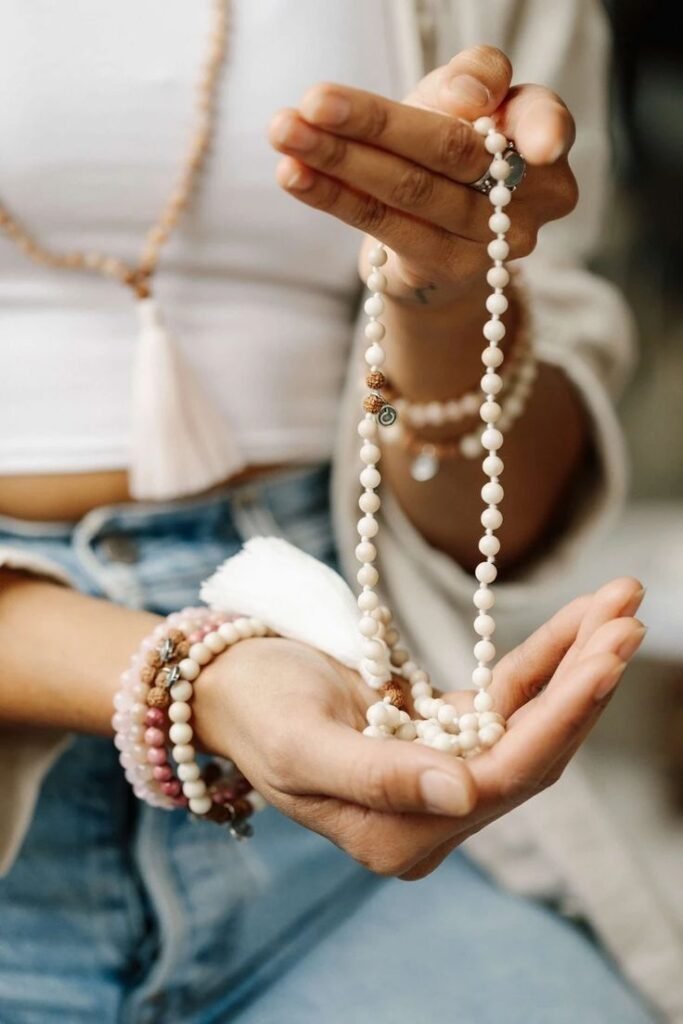
Mala beads aren’t just for meditation sessions. Many wear them daily as a reminder of their intentions.
They can also be placed on your work desk, car mirror, or bedside table — becoming a quiet anchor in the middle of chaos.
Choosing Your Mala
[Image Placeholder] (Selection of malas in different colors and materials)
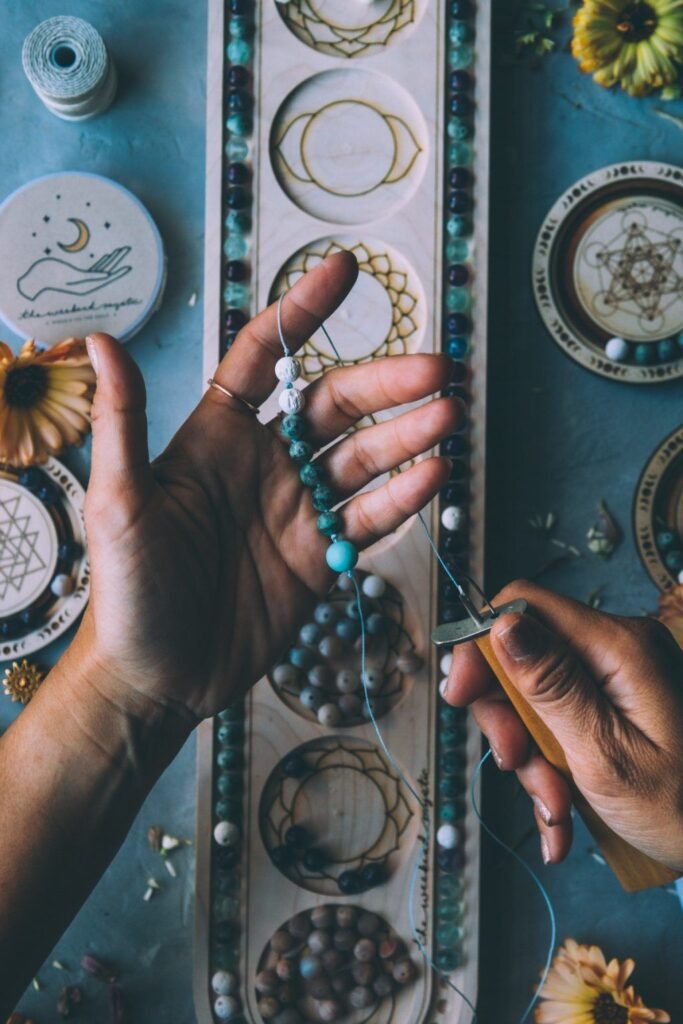
Picking a mala is personal:
- Gemstones: Amethyst for clarity, rose quartz for compassion, black onyx for strength.
- Wood/seeds: Sandalwood for grounding, rudraksha for protection.
- Design: Traditional 108 beads or shorter wrist malas with 27 beads.
Sometimes, the mala simply chooses you.
Caring for Your Mala
- Store it in a clean, safe place.
- Avoid letting others handle it during its early “energetic” period.
- Cleanse it periodically with incense smoke, moonlight, or mindful intention.
The Modern Mala Movement
Today, malas appear in yoga studios, meditation circles, and even fashion spreads. Whether worn as a spiritual tool or a style statement, they bridge ancient wisdom and modern living.
Final Thought
Mala beads aren’t about appearances or perfection. They’re about creating space — bead by bead — to pause, breathe, and remember what matters. In a world that moves too fast, they’re a small circle of stillness you can carry in your hands.


